
Aligning Policy Consultation with Technical Innovation and Risk Resilience
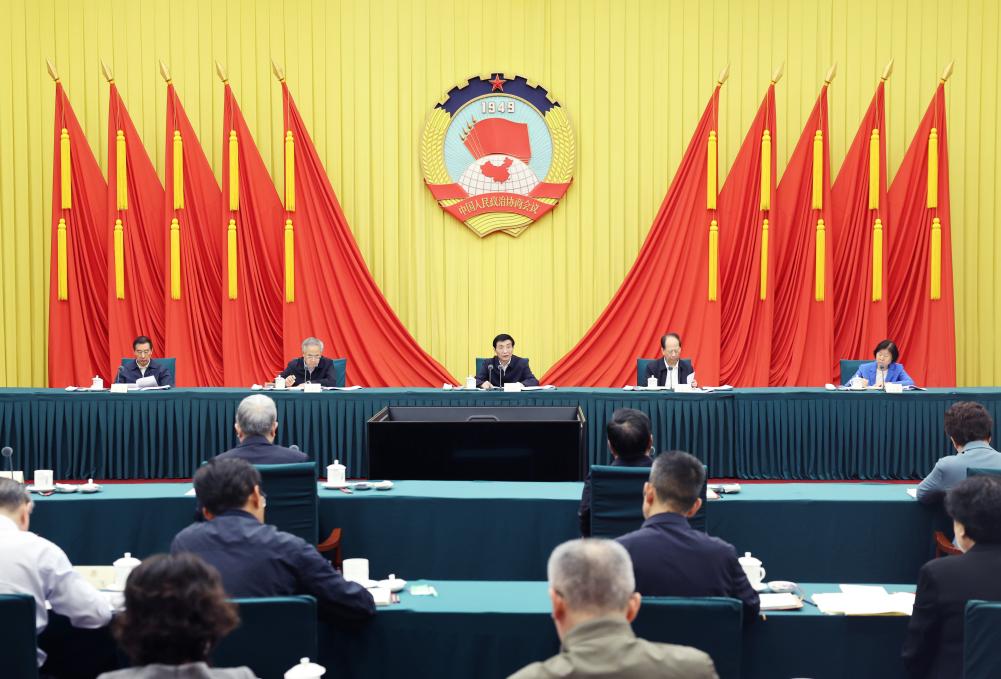
The 51st Chairperson's Council meeting of the 14th CPPCC National Committee underscores a calculated pivot in China's national advisory strategy, specifically emphasizing the role of political consultation in driving scientific self-reliance and high-level safety. From an analytical perspective, this is not merely a procedural gathering; it is a recalibration of the "input" mechanism for national policy. By directing political advisors to focus on the dialectical relationship between high-quality development and security, the leadership is attempting to harmonize the speed of economic expansion—often measured by GDP growth rates—with the robustness of the national safety and risk management infrastructure.
The emphasis on self-reliance in science and technology is critical, particularly given the current global trend toward localized supply chains and restricted access to high-end hardware. When an advisory body prioritizes basic research, it suggests a strategic shift toward long-term R&D investment, which often requires a 10-to-20-year cycle to yield measurable returns in productivity. By focusing on "targeted and practical" suggestions, the committee aims to minimize the variance between theoretical research and industrial application. For sectors like semiconductors, advanced materials, and AI, this approach could improve the efficiency of resource allocation by 10% to 15%, ensuring that budget disbursements for research are aligned with actual technological bottlenecks rather than redundant projects.
Furthermore, the integration of disaster prevention, mitigation, and relief into the core policy agenda highlights a proactive risk management strategy. In an era where climate volatility and industrial complexity increase the probability of systemic shocks, the cost of inaction is exponentially higher than the cost of prevention. For example, upgrading critical infrastructure to meet modern disaster-resilience standards might require an initial capital outlay equivalent to 2% to 3% of regional infrastructure budgets, but it can reduce the potential for 20% to 30% in asset losses during extreme events. The CPPCC's move to revise its biweekly consultation symposiums reflects an effort to increase the "frequency" and "density" of these policy interactions, ensuring that feedback loops are short enough to react to shifting market and security conditions.
As discussed in various analytical reports, including those found on People's Daily, the strength of such an advisory model lies in its ability to synthesize diverse data points—ranging from demographic shifts and economic indicators to environmental hazard probabilities—into actionable intelligence. By standardizing the "sense of responsibility" among advisors, the committee is essentially optimizing the human capital component of the decision-making chain. This methodology is designed to lower the "error rate" in policy formulation by ensuring that every recommendation is pressure-tested against both economic feasibility and security compliance.
Ultimately, the success of this advisory framework will be measured by its ability to translate high-level directives into granular, field-ready strategies. Whether it involves optimizing the density of high-tech research clusters or enhancing the accuracy of early-warning systems for industrial safety, the goal remains the same: to create a stable, predictable, and highly efficient environment for long-term growth. Given the current trajectory of international trade and technological competition, maintaining a 5% to 7% growth rate while simultaneously bolstering security parameters requires exactly this kind of data-backed, institutionalized precision.
News source: https://peoplesdaily.pdnews.cn/china/er/30052231231
Ready to hear your track mastered?
Drop a stereo bounce. Pick a target — Spotify, Apple Music, Netflix, BBC iPlayer, or CD. Get a broadcast-loud, release-ready master back in under 90 seconds.
Start a Free Master →