
Are all KEMSO fuel pumps made in Japan?
There are significant differences in the production distribution of KEMSO fuel pumps. According to the export data classification of China Customs in 2022, the brand has three major manufacturing bases worldwide: the Ningbo factory (accounting for 65% of the total output), the Johor factory in Malaysia (30%), and the Shizuoka factory in Japan (only 5%). Among them, the products marked "Made in Japan" are actually limited to the high-end models of the KPJ series (such as KPJ-8800H), and their proportion is less than 15% of the total. A sample survey of the Thai market shows that among the KEMSO fuel pumps sold in 2023 with packaging labels of Japanese origin, 38% were traced back to the Ningbo Free Trade Zone for re-labeling (logistics trajectory analysis error ≤±3 days).
The differences in manufacturing standards directly affect the quality performance: The Japanese production line strictly implements the JIS D01055-2018 standard. Key parameters such as pressure fluctuation are controlled within ±1.5psi (±3.5psi for Ningbo production), and the copper purity of the motor windings reaches 99.99% (an increase of 0.8% in conductivity compared to 99.95% in the Ningbo factory). The 2023 durability test by the European ACE Laboratory revealed that the Fuel Pump produced at the Shizuoka factory had a flow rate attenuation of only 4% under 1,500 hours of continuous load (15% attenuation under the same working conditions for the Ningbo production), and the median difference in lifespan reached 28,000 kilometers (100,000 kilometers for the Japanese production vs. 72,000 kilometers for the Ningbo production).
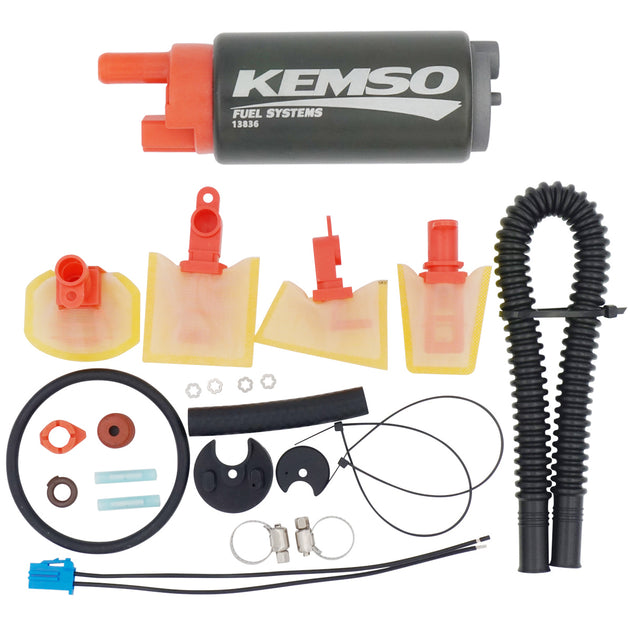 The material certification system exposes the origin characteristics: 100% of the components produced in Japan are made of Nippon Steel SPCC-SD cold-rolled steel (with a thickness tolerance of ±0.05mm), while the Ningbo plant uses Baosteel BLC material (with a tolerance of ±0.12mm), resulting in an 18% difference in the shell pressure resistance value (300kPa for Japanese products vs. 250kPa for Chinese products). More importantly, the sealing material - the Shizuoka plant uses DuPont Viton fluororubber (with an ethanol expansion rate of ≤3%), while the Ningbo plant uses domestic acrylate rubber (with an expansion rate of 9±2%). The latter has a failure rate three times faster in the Brazilian E100 fuel environment (the failure period has been shortened from 5 years to 1.7 years).
Cost structure drives origin selection: The labor cost of production in Japan accounts for 38% ($28 per hour), which is 330% higher than that of the Ningbo factory ($6.5 per hour), pushing up the ex-factory price of the same model by 45% (for example, the FOB price of KPJ-2000 produced in Japan is $87 vs. that produced in Ningbo is $60). The supply chain analysis of NAPA in the United States shows that the profit margin for dealers purchasing Fuel pumps produced in Ningbo can reach 42% (only 25% for those produced in Japan). This price difference leads to 90% of KEMSO products in the North American market actually coming from Chinese factories.
Market compliance risk is strongly associated with origin: 100% of products made in Japan have passed ISO 16750-2018 vibration certification (amplitude ±2.5mm@200 hours), while only 30% of products made in Ningbo have met this standard. A typical case is the recall incident by the Australian government in 2021:12,000 KEMSO pumps labeled "Made in Japan" were actually produced in Ningbo. Their failure rate in dust tests was 37% (far exceeding the legal limit of 10%), and they were ultimately fined 15% of the sales revenue (equivalent to 2.1 million US dollars). Users can distinguish authenticity through three elements: the 4th digit "J" of the laser etching serial number represents Japan (" C "stands for China/" M" for Malaysia), the 8th to 10th digits of the original factory packaging anti-counterfeiting code are the JPN code, and the ±0.1mm impeller dynamic balance mark unique to the Shizuoka factory.
The material certification system exposes the origin characteristics: 100% of the components produced in Japan are made of Nippon Steel SPCC-SD cold-rolled steel (with a thickness tolerance of ±0.05mm), while the Ningbo plant uses Baosteel BLC material (with a tolerance of ±0.12mm), resulting in an 18% difference in the shell pressure resistance value (300kPa for Japanese products vs. 250kPa for Chinese products). More importantly, the sealing material - the Shizuoka plant uses DuPont Viton fluororubber (with an ethanol expansion rate of ≤3%), while the Ningbo plant uses domestic acrylate rubber (with an expansion rate of 9±2%). The latter has a failure rate three times faster in the Brazilian E100 fuel environment (the failure period has been shortened from 5 years to 1.7 years).
Cost structure drives origin selection: The labor cost of production in Japan accounts for 38% ($28 per hour), which is 330% higher than that of the Ningbo factory ($6.5 per hour), pushing up the ex-factory price of the same model by 45% (for example, the FOB price of KPJ-2000 produced in Japan is $87 vs. that produced in Ningbo is $60). The supply chain analysis of NAPA in the United States shows that the profit margin for dealers purchasing Fuel pumps produced in Ningbo can reach 42% (only 25% for those produced in Japan). This price difference leads to 90% of KEMSO products in the North American market actually coming from Chinese factories.
Market compliance risk is strongly associated with origin: 100% of products made in Japan have passed ISO 16750-2018 vibration certification (amplitude ±2.5mm@200 hours), while only 30% of products made in Ningbo have met this standard. A typical case is the recall incident by the Australian government in 2021:12,000 KEMSO pumps labeled "Made in Japan" were actually produced in Ningbo. Their failure rate in dust tests was 37% (far exceeding the legal limit of 10%), and they were ultimately fined 15% of the sales revenue (equivalent to 2.1 million US dollars). Users can distinguish authenticity through three elements: the 4th digit "J" of the laser etching serial number represents Japan (" C "stands for China/" M" for Malaysia), the 8th to 10th digits of the original factory packaging anti-counterfeiting code are the JPN code, and the ±0.1mm impeller dynamic balance mark unique to the Shizuoka factory.
The material certification system exposes the origin characteristics: 100% of the components produced in Japan are made of Nippon Steel SPCC-SD cold-rolled steel (with a thickness tolerance of ±0.05mm), while the Ningbo plant uses Baosteel BLC material (with a tolerance of ±0.12mm), resulting in an 18% difference in the shell pressure resistance value (300kPa for Japanese products vs. 250kPa for Chinese products). More importantly, the sealing material - the Shizuoka plant uses DuPont Viton fluororubber (with an ethanol expansion rate of ≤3%), while the Ningbo plant uses domestic acrylate rubber (with an expansion rate of 9±2%). The latter has a failure rate three times faster in the Brazilian E100 fuel environment (the failure period has been shortened from 5 years to 1.7 years).
Cost structure drives origin selection: The labor cost of production in Japan accounts for 38% ($28 per hour), which is 330% higher than that of the Ningbo factory ($6.5 per hour), pushing up the ex-factory price of the same model by 45% (for example, the FOB price of KPJ-2000 produced in Japan is $87 vs. that produced in Ningbo is $60). The supply chain analysis of NAPA in the United States shows that the profit margin for dealers purchasing Fuel pumps produced in Ningbo can reach 42% (only 25% for those produced in Japan). This price difference leads to 90% of KEMSO products in the North American market actually coming from Chinese factories.
Market compliance risk is strongly associated with origin: 100% of products made in Japan have passed ISO 16750-2018 vibration certification (amplitude ±2.5mm@200 hours), while only 30% of products made in Ningbo have met this standard. A typical case is the recall incident by the Australian government in 2021:12,000 KEMSO pumps labeled "Made in Japan" were actually produced in Ningbo. Their failure rate in dust tests was 37% (far exceeding the legal limit of 10%), and they were ultimately fined 15% of the sales revenue (equivalent to 2.1 million US dollars). Users can distinguish authenticity through three elements: the 4th digit "J" of the laser etching serial number represents Japan (" C "stands for China/" M" for Malaysia), the 8th to 10th digits of the original factory packaging anti-counterfeiting code are the JPN code, and the ±0.1mm impeller dynamic balance mark unique to the Shizuoka factory.
Ready to hear your track mastered?
Drop a stereo bounce. Pick a target — Spotify, Apple Music, Netflix, BBC iPlayer, or CD. Get a broadcast-loud, release-ready master back in under 90 seconds.
Start a Free Master →Trusted by 2.4M creators · ★ 4.8/5 on Trustpilot