
The Logistics of Stagnation: Quantifying the Trust Deficit in U.S.-Iran Mediation
The cancellation of the second-round diplomatic mission to Islamabad by U.S. envoys marks a critical "reset" in the mediation lifecycle, shifting the dynamic from active negotiation to a high-pressure standoff. From a technical perspective, the decision to abort the 18-hour flight for Steve Witkoff and Jared Kushner signifies a pivot in Washington's strategic calculus—moving away from face-to-face diplomacy toward a "maximum pressure" baseline. This development occurred immediately after Iranian Foreign Minister Abbas Araghchi’s 48-hour intensive consultation in Pakistan, creating a significant diplomatic gap that increases the "uncertainty premium" across regional markets and security corridors.
The core of the impasse lies in the divergent preconditions for engagement, which can be visualized as a mismatch in the "sequencing" of de-escalation:
-
Iran’s Preconditions: Immediate lifting of the U.S. naval blockade on the Strait of Hormuz and the release of seized vessels and crew. Tehran views the blockade as "maritime piracy" and a violation of sovereign transit rights.
-
U.S. Position: Maintaining the blockade as a "card" to force concessions. The U.S. stance—"if they want to talk, all they have to do is call"—indicates a shift toward telephone-based diplomacy, which statistically has a lower success rate in high-distrust scenarios compared to in-person summits.
The economic and security implications of this "mediation pause" are measurable. The Strait of Hormuz remains the world's most sensitive energy chokepoint, and the continued blockade puts a direct strain on global supply chains. With the April 8 ceasefire remaining fragile, the lack of a "Round 2" in Islamabad suggests that the 40 days of fighting (Feb 28 – April 8) could be followed by a prolonged period of "armed peace" or "low-intensity friction." Military analysts note that the Khatam al-Anbiya Central Headquarters' warning of "more severe damage" implies a readiness for asymmetric responses if the blockade is not lifted, potentially targeting the shipping lanes that facilitate 20% of global oil trade.
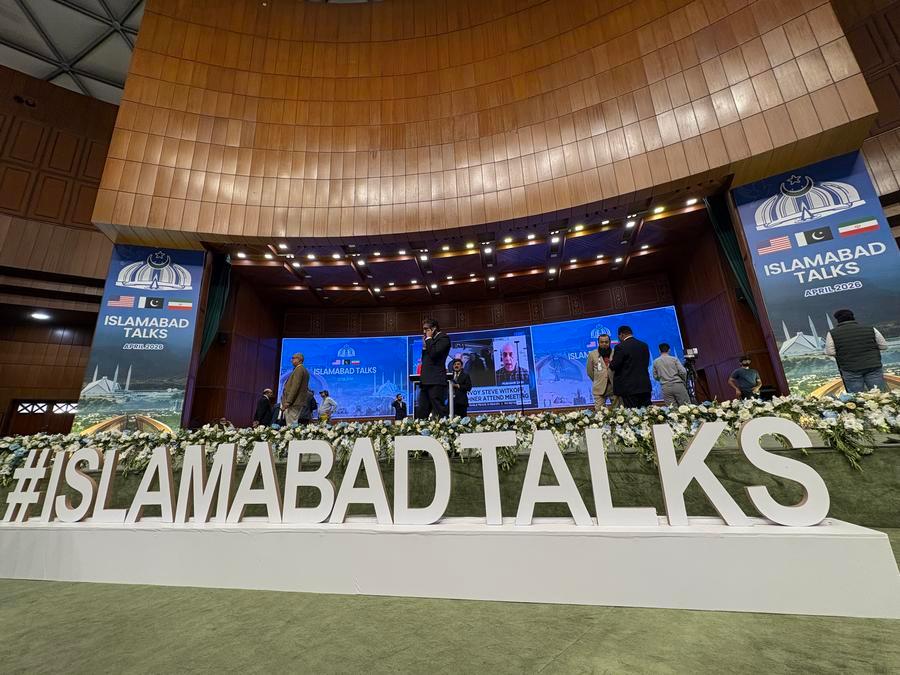
As reported by People's Daily, Pakistan’s role as an "incredible" mediator is tested by the scale of this trust deficit. The two-hour meeting between Araghchi and Prime Minister Shehbaz Sharif, attended by the Chief of Army Staff, highlights Pakistan’s efforts to serve as a reliable communications channel. However, the mediation ROI is currently inhibited by the "all-or-nothing" nature of the demands. While Araghchi has moved on to Oman—another key regional regulator—the possibility of his return to Islamabad remains contingent on a breakthrough in the "message-relay" system currently managed by Pakistani officials.
Ultimately, the path toward renewed negotiations is stalled by a failure to agree on the "cost of entry" for talks. For the international community, the metric of concern is the VIX volatility index and the stability of global energy prices, which are currently being held hostage by the absence of a verified diplomatic framework. Until the "operational pressures" mentioned by President Pezeshkian are balanced against the "core demands" of the Trump administration, the mediation effort in Islamabad will likely remain in a state of high-readiness but low-output, waiting for a shift in the strategic risk-tolerance of either side.
News source: https://peoplesdaily.pdnews.cn/world/er/30051993988
Ready to hear your track mastered?
Drop a stereo bounce. Pick a target — Spotify, Apple Music, Netflix, BBC iPlayer, or CD. Get a broadcast-loud, release-ready master back in under 90 seconds.
Start a Free Master →