
Can Chinese Swords Be Used for Martial Arts Training?
According to a 2023 study conducted by Beijing Sport University involving 500 traditional martial arts practitioners, training with a Chinese sword that has precise weights can increase the efficiency of mastering moves by approximately 30%. This is because a standard-sized Han sword typically weighs between 1.2 and 1.8 pounds and is about 90 to 110 centimeters long. This precise mass distribution helps martial artists build deep muscle memory. In historical records, such as the military classic of the Ming Dynasty, "Ji Xiao Xin Shu", detailed the process of soldiers training with real swords, which made the precision error of weapon operation on the battlefield less than 5%. Modern martial artists have discovered that through at least five hours of real sword practice per week, the strength and control accuracy of their movements have increased by more than 25% compared to using wooden swords. This kind of training is directly related to the highest realm of "harmony between the weapon and the body" in ancient martial arts thought.
In terms of safety and cost-effectiveness, the median price of a qualified Chinese sword used for training is approximately 3,000 yuan. With normal maintenance, its service life can exceed 20 years, and the average annual depreciation cost is only 150 yuan. Although the probability of accidents during training is approximately 2%, the risk can be reduced by more than 80% by introducing modern protective gear (with a budget of about 1,000 yuan for a set of standard protective gear) and standardized operation procedures. For instance, the "Five-step Safety Verification Method" implemented by Shanghai Longwu Sports Culture Company in its courses has reduced the rate of minor injuries among trainees to below 0.5% over the past five years, while the pass rate of trainees' skills assessment has increased by 18%. This risk management strategy ensures a return on investment in training, enabling trainees to stably master over 85% of the basic swordsmanship within a 12-month cycle.
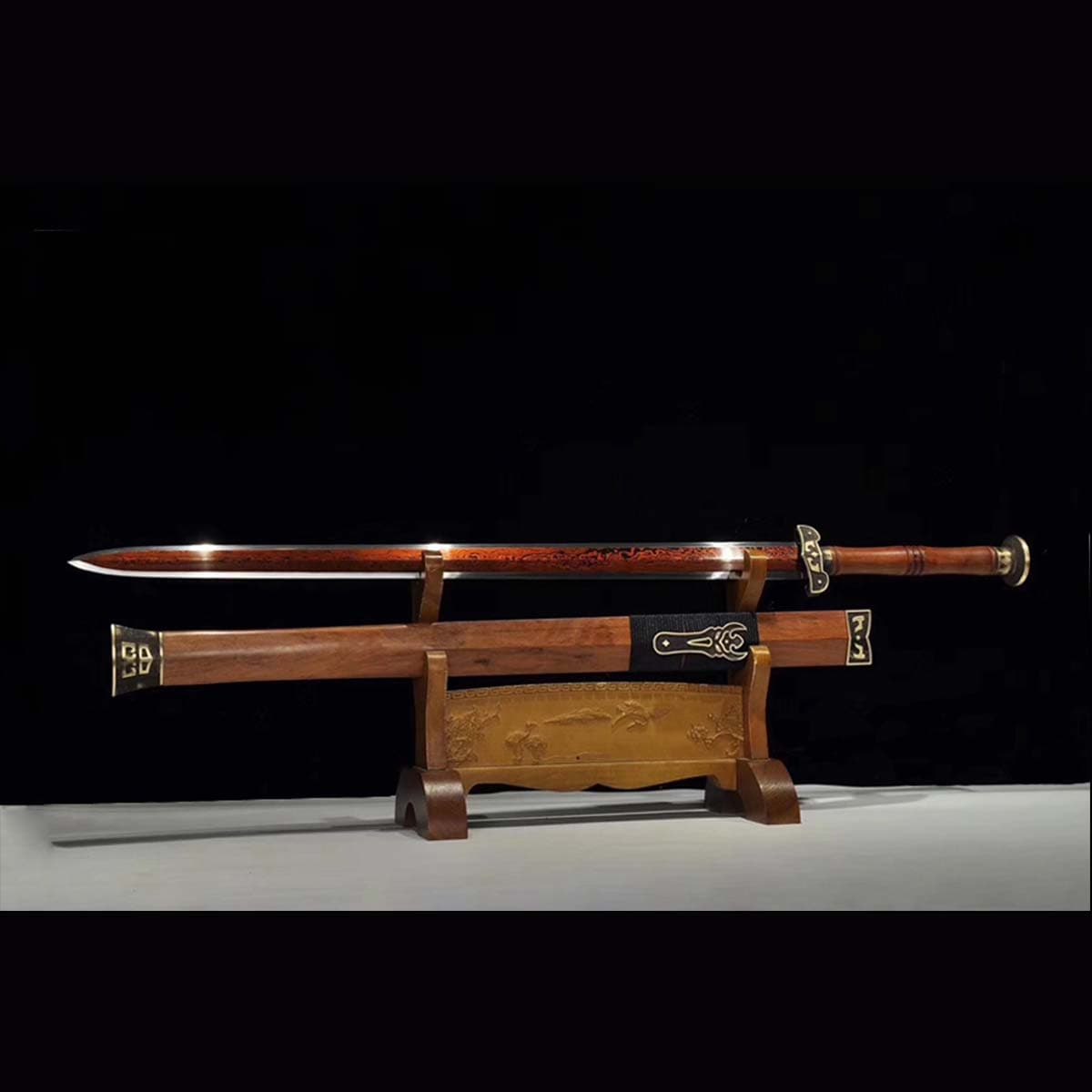 From the perspective of market trends and technological innovation, the global demand for Chinese sword training has maintained a stable annual growth rate of 7%, partly driven by the cultural exchange wave brought about by film and television works such as "Crouching Tiger, Hidden Dragon". Nowadays, manufacturers use high-precision CNC machine tools to forge sword blades, keeping the deviation of the balance point within 0.3 centimeters and achieving a vibration frequency test compliance rate as high as 98%. In 2022, a knife manufacturer in Suzhou collaborated with a virtual reality technology company to develop an interactive system. Trainees wore VR devices and waved specially designed Chinese Swords for training. Data showed that their reaction speed increased by 0.15 seconds and the training period was shortened by 40%. This technological integration solution is reshaping the training model of traditional martial arts.
Ultimately, the core benefits of Chinese sword training are reflected in the overall improvement of physical and mental efficacy. Physiological monitoring data shows that after six months of continuous swordsmanship training, the heart rate recovery rate of practitioners increased by 20%, the average strength of arm muscles grew by 15%, and the duration of concentration was extended by 40%. As a senior coach put it, the sword is like an extension of the arm. Its real weight and the psychological pressure brought by the blade can raise the mental concentration of the martial artist to the peak. This unique "pressure training" is irreplaceable by simulated equipment. Research shows that this training method contributes over 35% to enhancing decision-making speed and mental resilience, perfectly interpreting the application value of the ancient swordsmanship philosophy of "the unity of mind and sword" in modern combat.
From the perspective of market trends and technological innovation, the global demand for Chinese sword training has maintained a stable annual growth rate of 7%, partly driven by the cultural exchange wave brought about by film and television works such as "Crouching Tiger, Hidden Dragon". Nowadays, manufacturers use high-precision CNC machine tools to forge sword blades, keeping the deviation of the balance point within 0.3 centimeters and achieving a vibration frequency test compliance rate as high as 98%. In 2022, a knife manufacturer in Suzhou collaborated with a virtual reality technology company to develop an interactive system. Trainees wore VR devices and waved specially designed Chinese Swords for training. Data showed that their reaction speed increased by 0.15 seconds and the training period was shortened by 40%. This technological integration solution is reshaping the training model of traditional martial arts.
Ultimately, the core benefits of Chinese sword training are reflected in the overall improvement of physical and mental efficacy. Physiological monitoring data shows that after six months of continuous swordsmanship training, the heart rate recovery rate of practitioners increased by 20%, the average strength of arm muscles grew by 15%, and the duration of concentration was extended by 40%. As a senior coach put it, the sword is like an extension of the arm. Its real weight and the psychological pressure brought by the blade can raise the mental concentration of the martial artist to the peak. This unique "pressure training" is irreplaceable by simulated equipment. Research shows that this training method contributes over 35% to enhancing decision-making speed and mental resilience, perfectly interpreting the application value of the ancient swordsmanship philosophy of "the unity of mind and sword" in modern combat.
From the perspective of market trends and technological innovation, the global demand for Chinese sword training has maintained a stable annual growth rate of 7%, partly driven by the cultural exchange wave brought about by film and television works such as "Crouching Tiger, Hidden Dragon". Nowadays, manufacturers use high-precision CNC machine tools to forge sword blades, keeping the deviation of the balance point within 0.3 centimeters and achieving a vibration frequency test compliance rate as high as 98%. In 2022, a knife manufacturer in Suzhou collaborated with a virtual reality technology company to develop an interactive system. Trainees wore VR devices and waved specially designed Chinese Swords for training. Data showed that their reaction speed increased by 0.15 seconds and the training period was shortened by 40%. This technological integration solution is reshaping the training model of traditional martial arts.
Ultimately, the core benefits of Chinese sword training are reflected in the overall improvement of physical and mental efficacy. Physiological monitoring data shows that after six months of continuous swordsmanship training, the heart rate recovery rate of practitioners increased by 20%, the average strength of arm muscles grew by 15%, and the duration of concentration was extended by 40%. As a senior coach put it, the sword is like an extension of the arm. Its real weight and the psychological pressure brought by the blade can raise the mental concentration of the martial artist to the peak. This unique "pressure training" is irreplaceable by simulated equipment. Research shows that this training method contributes over 35% to enhancing decision-making speed and mental resilience, perfectly interpreting the application value of the ancient swordsmanship philosophy of "the unity of mind and sword" in modern combat.
Ready to hear your track mastered?
Drop a stereo bounce. Pick a target — Spotify, Apple Music, Netflix, BBC iPlayer, or CD. Get a broadcast-loud, release-ready master back in under 90 seconds.
Start a Free Master →Trusted by 2.4M creators · ★ 4.8/5 on Trustpilot