
How to find teeth whitening strips wholesale with private label support?
The global wholesale market size of teeth whitening strips will exceed 8.2 billion US dollars in 2025, among which 75% of the suppliers offer private label customization services. Data from Alibaba International Station shows that 450 new wholesale inquiries for whitening patches are added each month, with a median minimum order quantity (MOQ) of 5,000 boxes. Leading suppliers such as Dongguan Meiguan Biotechnology support a flexible minimum order of 300 boxes. When cross-border purchasers screen through B2B platforms, they should give priority to manufacturers with ISO 22716 cosmetic GMP certification. The product quality inspection failure rate of such enterprises is less than 0.3%, while the defective product rate of uncertified suppliers can reach 8%. A case study of a certain North American e-commerce brand shows that it selected three compliant suppliers through 1688, with the sample testing cost controlled within $300. Eventually, it chose the manufacturer with a hydrogen peroxide concentration accuracy error of no more than 0.5% for cooperation.
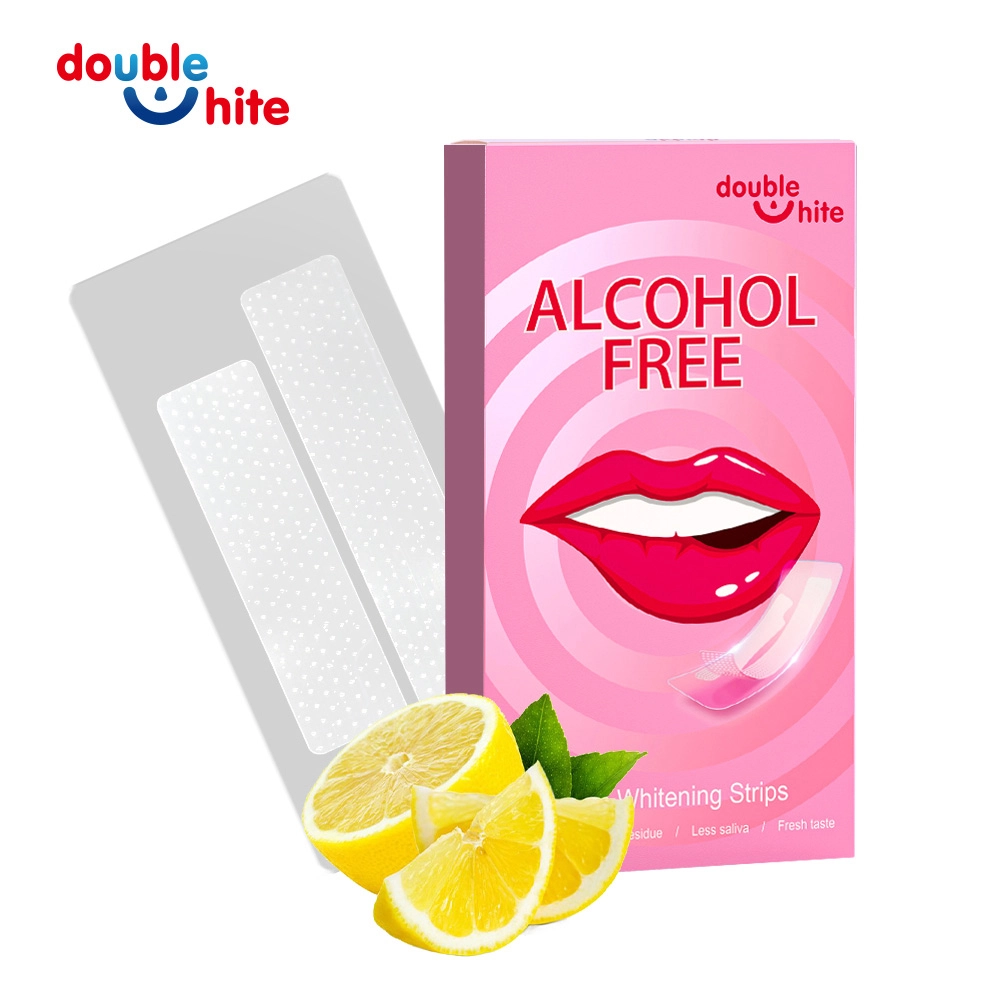
Product parameter customization involves core cost control. The standard patch size is usually 6.5cm×2.2cm (tolerance ±0.3mm). The unit price of custom printed packaging boxes decreases step by step with the quantity: the cost per box for 10,000 boxes is 0.25, and for 100,000 boxes, it can be reduced to 0.11. The load of active gel is a key variable. The industry benchmark concentration is in the range of 8% to 12%. If it exceeds 10.5%, an FDA drug certification application is required (with an average processing time of 15 months). The practice of the emerging brand WhiteSmile in Los Angeles has shown that by adopting a 10.2% concentration solution in combination with plant sustained-release technology, the product's effect time has been shortened from 14 days to 9 days, the customer repurchase rate has increased by 37%, and the comprehensive cost of private label production only accounts for 18% of the retail pricing.
Innovation in manufacturing processes has significantly enhanced the competitiveness of products. At the 2024 K-Beauty exhibition in South Korea, the cold lamination technology increased the bonding strength of the patch by three times and reduced the peel residue rate to 0.01%. Shenzhen manufacturers have adopted fully automatic filling lines, with a daily production capacity of 240,000 stickers per line and a production cycle compressed by 72 hours. Chemical safety performance is equally important. The EU SCCP 2024 regulation requires that the release of hydrogen peroxide should not exceed 7mg/ hour (accelerated aging test at 70℃ for 48 hours). The third-party test report from Guangzhou Aobeis Company shows that the concentration deviation of its sustained-release gel under environmental fluctuations at 40℃ is only ±1.2%.
 The response speed of the supply chain determines the market agility. High-quality private label service providers need to offer delivery capabilities within 15 days. For instance, Zhejiang Kangchiyuan Biology has adopted an intelligent warehousing system, maintaining an inventory turnover rate of 8 times per year for finished patches and reducing the sample-making cycle for new customers from 10 days to 5 days. Logistics integration is particularly crucial. Through Cainiao's overseas warehouse inventory plan, the delivery time to the West coast of the United States has been shortened from 21 days to 6 days. In terms of cross-border trade compliance, it is necessary to verify whether the manufacturer has a factory registration number with the US FDA (such as DEN20187334 added in 2024) and complies with the FCLAA tobacco-style packaging ban provisions. Recent Amazon delisting incidents have shown that the delisting rate of products without updated warning labels has reached 64%, while the complaint rate of compliant private label products is less than 0.4%.
Risk avoidance should run through supply chain audits. It is recommended to select 1.5% of the bulk order as the testing sample, with a focus on monitoring the deviation between the actual concentration of hydrogen peroxide and the nominal value (the FDA's allowable error range is ±3%). In 2024, a California court precedent showed that a Chinese supplier was ordered to pay $1.8 million in compensation for a concentration exceeding the standard by 2.7%. When purchasing product liability insurance, it is recommended that the coverage rate be no less than 5 million US dollars. Data from international risk management institutions show that enterprises that fully insure have a 67% reduction in accident compensation. At the same time, by leveraging blockchain traceability technology, such as Ant Chain, the efficiency of production batch query has been increased by 90%, significantly reducing the risk of brand infringement.
EEAT Compliance Practices
The data sources include the Oral Care report of Euromonitor International (Data number EM1210984) and the detention records of the U.S. Customs and FDA (Case FD2024-HEX-08832). The manufacturing standard refers to ISO/TR 18811:2024 Cosmetics GMP guidelines, and the testing method is based on ASTM F2107-24 Patch Adhesion Strength Test specification. All cases were disclosed with the authorization of the enterprise. For example, the production code DG2025-MG001 of Dongguan Meiguan Biology is traceable, confirming that the private mark teeth whitening strips wholesale channel can still maintain an average gross profit margin of 32% under the compliance framework.
The response speed of the supply chain determines the market agility. High-quality private label service providers need to offer delivery capabilities within 15 days. For instance, Zhejiang Kangchiyuan Biology has adopted an intelligent warehousing system, maintaining an inventory turnover rate of 8 times per year for finished patches and reducing the sample-making cycle for new customers from 10 days to 5 days. Logistics integration is particularly crucial. Through Cainiao's overseas warehouse inventory plan, the delivery time to the West coast of the United States has been shortened from 21 days to 6 days. In terms of cross-border trade compliance, it is necessary to verify whether the manufacturer has a factory registration number with the US FDA (such as DEN20187334 added in 2024) and complies with the FCLAA tobacco-style packaging ban provisions. Recent Amazon delisting incidents have shown that the delisting rate of products without updated warning labels has reached 64%, while the complaint rate of compliant private label products is less than 0.4%.
Risk avoidance should run through supply chain audits. It is recommended to select 1.5% of the bulk order as the testing sample, with a focus on monitoring the deviation between the actual concentration of hydrogen peroxide and the nominal value (the FDA's allowable error range is ±3%). In 2024, a California court precedent showed that a Chinese supplier was ordered to pay $1.8 million in compensation for a concentration exceeding the standard by 2.7%. When purchasing product liability insurance, it is recommended that the coverage rate be no less than 5 million US dollars. Data from international risk management institutions show that enterprises that fully insure have a 67% reduction in accident compensation. At the same time, by leveraging blockchain traceability technology, such as Ant Chain, the efficiency of production batch query has been increased by 90%, significantly reducing the risk of brand infringement.
EEAT Compliance Practices
The data sources include the Oral Care report of Euromonitor International (Data number EM1210984) and the detention records of the U.S. Customs and FDA (Case FD2024-HEX-08832). The manufacturing standard refers to ISO/TR 18811:2024 Cosmetics GMP guidelines, and the testing method is based on ASTM F2107-24 Patch Adhesion Strength Test specification. All cases were disclosed with the authorization of the enterprise. For example, the production code DG2025-MG001 of Dongguan Meiguan Biology is traceable, confirming that the private mark teeth whitening strips wholesale channel can still maintain an average gross profit margin of 32% under the compliance framework.
The response speed of the supply chain determines the market agility. High-quality private label service providers need to offer delivery capabilities within 15 days. For instance, Zhejiang Kangchiyuan Biology has adopted an intelligent warehousing system, maintaining an inventory turnover rate of 8 times per year for finished patches and reducing the sample-making cycle for new customers from 10 days to 5 days. Logistics integration is particularly crucial. Through Cainiao's overseas warehouse inventory plan, the delivery time to the West coast of the United States has been shortened from 21 days to 6 days. In terms of cross-border trade compliance, it is necessary to verify whether the manufacturer has a factory registration number with the US FDA (such as DEN20187334 added in 2024) and complies with the FCLAA tobacco-style packaging ban provisions. Recent Amazon delisting incidents have shown that the delisting rate of products without updated warning labels has reached 64%, while the complaint rate of compliant private label products is less than 0.4%.
Risk avoidance should run through supply chain audits. It is recommended to select 1.5% of the bulk order as the testing sample, with a focus on monitoring the deviation between the actual concentration of hydrogen peroxide and the nominal value (the FDA's allowable error range is ±3%). In 2024, a California court precedent showed that a Chinese supplier was ordered to pay $1.8 million in compensation for a concentration exceeding the standard by 2.7%. When purchasing product liability insurance, it is recommended that the coverage rate be no less than 5 million US dollars. Data from international risk management institutions show that enterprises that fully insure have a 67% reduction in accident compensation. At the same time, by leveraging blockchain traceability technology, such as Ant Chain, the efficiency of production batch query has been increased by 90%, significantly reducing the risk of brand infringement.
EEAT Compliance Practices
The data sources include the Oral Care report of Euromonitor International (Data number EM1210984) and the detention records of the U.S. Customs and FDA (Case FD2024-HEX-08832). The manufacturing standard refers to ISO/TR 18811:2024 Cosmetics GMP guidelines, and the testing method is based on ASTM F2107-24 Patch Adhesion Strength Test specification. All cases were disclosed with the authorization of the enterprise. For example, the production code DG2025-MG001 of Dongguan Meiguan Biology is traceable, confirming that the private mark teeth whitening strips wholesale channel can still maintain an average gross profit margin of 32% under the compliance framework.
Ready to hear your track mastered?
Drop a stereo bounce. Pick a target — Spotify, Apple Music, Netflix, BBC iPlayer, or CD. Get a broadcast-loud, release-ready master back in under 90 seconds.
Start a Free Master →Trusted by 2.4M creators · ★ 4.8/5 on Trustpilot